
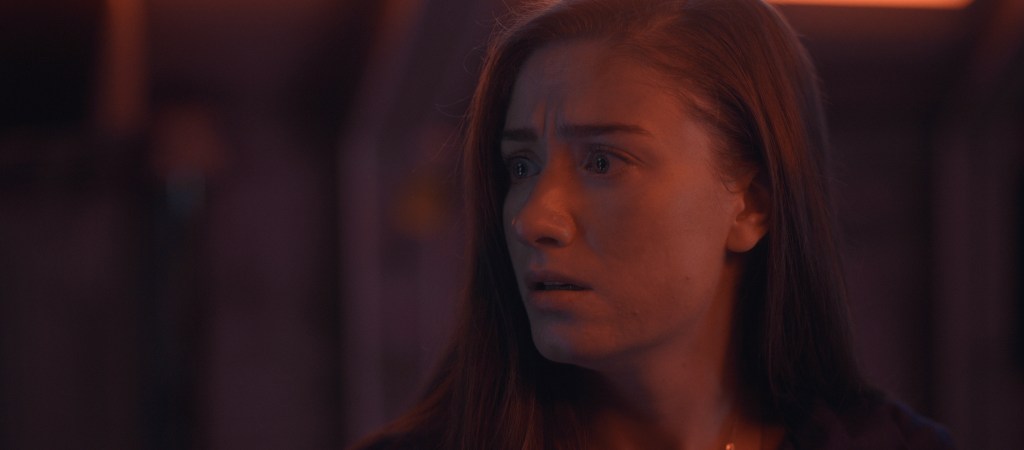
In the realm of digital cinematography, Sony’s BURANO camera has emerged as a game-changer, offering filmmakers a blend of advanced technology and practical versatility. This was exemplified in “Hestia,” a short sci-fi film by Red Robin Films, which harnessed the BURANO’s capabilities to bring a space odyssey to life within the controlled environment of virtual production.
Sony BURANO: A Technological Marvel
The Sony BURANO is equipped with an 8.6K full-frame CMOS sensor, delivering exceptional image quality that matches the renowned VENICE 2. This sensor offers 16 stops of dynamic range and dual base ISO settings of 800 and 3200, ensuring remarkable performance across various lighting conditions. A standout feature is its in-body image stabilization, providing 5-axis stabilization with E-mount lenses and 3-axis with PL-mount lenses, which is particularly beneficial for handheld shooting scenarios. The BURANO also incorporates advanced autofocus technology with face and eye tracking, a significant advantage for single operators in dynamic shooting environments. Its compact and lightweight design enhances mobility, making it suitable for both solo and team productions.
“Hestia”: Merging Artistry with Technology
Directed by Kieran Lowley and Isobel Drane, “Hestia” is a poignant short film set in the vast emptiness of space. Produced in collaboration with Sony Professional Europe, the film was shot at Sony’s Digital Media Production Centre Europe (DMPCE) at Pinewood Studios UK. The production utilized Sony’s virtual production solutions, including the new Verona Crystal LED and both the BURANO and VENICE 2 cinema cameras.
The narrative required the camera to navigate the restrictive confines of a spacecraft set, necessitating numerous handheld shots. The BURANO’s lightweight and compact design made it an ideal choice for these sequences, allowing for greater mobility and reducing operator fatigue. Its ability to shoot in RAW XOCN-LT format ensured high-quality footage that seamlessly matched the VENICE 2, which was employed for wider, more VFX-intensive shots, such as the zero-gravity sequence.
Virtual Production Synergy
“Hestia” stands as a testament to the synergy between cutting-edge technology and creative storytelling. The film leveraged Sony’s Crystal LED VERONA display system, creating immersive and dynamic backgrounds that enhanced the storytelling without the need for extensive post-production. This approach not only streamlined the production process but also allowed the filmmakers to visualize scenes in real-time, fostering a more collaborative and efficient workflow.
Conclusion
The collaboration between Red Robin Films and Sony on “Hestia” showcases the transformative potential of the Sony BURANO in modern filmmaking. Its advanced features, combined with a design that prioritizes mobility and versatility, make it a formidable tool for filmmakers navigating the evolving landscape of digital cinema. As demonstrated in “Hestia,” the BURANO not only meets the technical demands of high-quality production but also empowers storytellers to push the boundaries of their creative visions.
For a visual glimpse into “Hestia,” you can watch the official trailer below:
 Tiger Spoon Media
Leave a comment